
Ready for the Feel Gut Weeks?

Up to 12 bottles FREE: DISCOVER NOW

--

Days

--

Hours

--

Mins

--

Secs
Login

– Before you continue reading –

Not only do we know almost everything about kombucha, we also brew it!

Our 8-times award-winning Raw Kombucha combines millions of active cultures with smart organic ingredients and vitamin C. Thirsty yet? Visit our shop and see for yourself!

Try Kombuchery
Editorial Note: This article deals with general scientific findings on kombucha and not with Kombuchery products. Scientific findings and study results are not automatically transferable to individual foods or products. The article does not replace medical or nutritional advice and is not to be understood as a health-related statement about specific foods or products.

The content is based on scientific literature, publicly available sources, and the author's assessment, and does not claim to be exhaustive. New studies may confirm, supplement, restrict, or refute existing findings. Scientific publications should therefore always be considered in the overall context of the available evidence.

Studies generally refer to the specific conditions, ingredients, microorganisms, dosages, manufacturing processes, and groups of people investigated. The presented results cannot therefore be readily transferred to other foods, recipes, manufacturing processes, or products.

No statements about the effects, properties, or health benefits of specific foods or products can be derived from the information presented.

Health-related claims for foods in the European Union are subject to the applicable legal requirements. The presentation of scientific research is therefore not to be equated with a permissible health-related claim about a food or product.

If you would like to delve deeper into a topic, we recommend consulting the scientific sources linked in the article and other independent specialist literature to gain as comprehensive an understanding as possible of the current state of research.

The History of Kombucha: Origins, Legends, and Tradition

The fermentation of the tea drink has a long tradition

In recent centuries, several legends and myths have accumulated around kombucha. Some are even a little amusing. However, they also show the long tradition in which the drink with the extraordinary name and its characteristic ingredients stands.

Kombucha is not merely a fad of recent years. However, the exact origins of the fermented tea drink have not been conclusively determined. Its early history is often associated with East Asia, particularly China. From there, the tradition is said to have spread to various regions. Kombucha also became known in Russia and Eastern Europe over time and was passed down from generation to generation.

Chinese Legend of Kombucha

A Chinese legend associates kombucha with the time of the first Chinese emperor, Qin Shi Huangdi, who ruled from 221 to 210 BCE. The emperor is said to have sought immortality and searched for a corresponding elixir of life. According to the legend, he may have encountered an early form of kombucha. However, there is no historical evidence that kombucha was already being drunk at that time or that it conferred immortality.

Chinese pagoda in a landscape surrounded by mountains and forest

The story shows how closely traditional drinks have been linked in narratives with ideas of longevity and well-being. Such traditions are part of cultural history, but are not evidence of a medicinal effect of kombucha.

The Japanese Doctor Kombu as the Namesake

Another well-known story tells of a doctor named Kombu. According to legend, he came to Japan in 414 CE and administered a drink to the ailing Emperor Inkyo that was supposed to help him. This is said to have been an early form of the fermented tea drink.

This story is often cited as an explanation for the name kombucha. However, it is not historically proven. The origin of the name remains disputed to this day, and there is no reliable evidence that a doctor named Kombu brought the drink to Japan.

Japanese Kelp Tea

Another explanation for the name kombucha leads to the Japanese term "kombu-cha": "Kombu" refers to an edible brown kelp, "cha" means tea. In Japan, kombucha or konbu-cha traditionally refers to an infusion made from kelp, not the fermented tea drink that we know today in many countries under the name kombucha.

The similarity of the terms may have contributed to confusion in the transmission and spread of the name. It cannot be said with certainty how exactly the designation for the fermented drink originated.

Japanese Samurai in the 10th Century

Japanese samurai also appear in some stories about kombucha. According to one legend, the warriors carried the drink with them in the 10th century to strengthen themselves for their battles. Some accounts even say that they carried the supposed miracle drink on their hips.

There is no reliable historical evidence for this story. Nevertheless, it is one of the many stories that have given kombucha a special, almost mystical reputation over time.

Today, the tea drink is still a popular topic

Kombucha became known particularly in Russia and Eastern Europe and spread to other regions in various ways. Families often passed their recipes and experiences on to one another. Exchanging a newly formed kombucha culture with other households is also one of the traditions associated with making it at home.

The personal connection to kombucha and the appreciation of the special drink are also evident in the many names by which it is known. These include, for example:

"Japanese Mother," "Russian Flower," "Medusa Tea," "Hero SCOBY," and "Magic SCOBY"

Kombucha culture in two large jars with cloth covers

There are countless affectionate stories about the drink, in which kombucha is attributed with supposedly healing and revitalizing effects. Such ideas are part of the lore surrounding the drink. However, they are not equivalent to scientifically proven health effects.

With kombucha, you are getting to know a time-honored form of fermentation. When you make the drink yourself, you are working with a method in which tea is fermented with the help of a community of yeasts and bacteria. This way, you can continue the tradition in a modern way.

Kombucha Origins: The Most Important Facts at a Glance

  • Origin: The early origins of kombucha are often thought to be in East Asia, particularly China. The exact origin has not been conclusively determined.
  • Historical Legends: Stories about Emperor Qin Shi Huangdi, the doctor Kombu, and the samurai are part of the lore, but are not reliably supported by historical evidence.
  • Name: The origin of the word "kombucha" is disputed. The Japanese "konbu-cha" traditionally refers to a kelp infusion.
  • Spread: Kombucha became known in Russia and Eastern Europe, among other places, and was later spread to many other countries.
  • Tradition Today: Kombucha is made both at home and commercially. Fermentation with yeasts and bacteria gives it its characteristic flavor.

FAQ: Frequently Asked Questions About the History of Kombucha

Where does kombucha originally come from?

Its early origins are often thought to be in East Asia, particularly China. However, historical sources are limited, which is why its exact origin cannot be determined with certainty.

How long has kombucha existed?

In literature, kombucha is often associated with a long tradition in Asia. However, frequently cited years such as 220 BCE should not be understood as indisputably proven dates for the first production of kombucha.

Did the doctor Kombu give kombucha its name?

This is a widespread legend for which there is no reliable historical evidence. The linguistic origin of the name is also not conclusively determined.

What does the word kombucha mean in Japanese?

The similarly sounding Japanese term "konbu-cha" refers to a tea infusion made from edible brown kelp. It is not the same as the fermented tea drink that is known internationally today as kombucha.

Was kombucha used as a medicine in the past?

In various traditions, kombucha and other fermented drinks have been associated with health effects. However, historical beliefs do not support any medicinal efficacy. Kombucha should therefore be considered a food and not a substitute for medical treatment.

Conclusion: A Time-Honored Drink with a Fascinating History

The history of kombucha combines fermentation, cultural traditions, and numerous legends. Even though many stories about emperors, doctors, and samurai cannot be historically confirmed, the long tradition of fermented tea drinks is a fascinating part of its history.

Whether you buy ready-made kombucha or make it yourself, you can discover a versatile fermented tea drink whose history to this day has been shaped by different cultures and traditions.
Leave a comment

Please note, comments need to be approved before they are published.

This site is protected by hCaptcha and the hCaptcha Privacy Policy and Terms of Service apply.

Recommended articles for you

More of my articles, from A, like alcohol-free kombucha cocktails, to Z, like lemon-ginger kombucha, can be found on our Kombuchery blog. Let's learn more about kombucha together!

View all

Fermentierte Lebensmittel im Winter: Welche Zutaten haben Saison?

Fermentierte Lebensmittel im Winter: Welche Zutaten haben Saison?

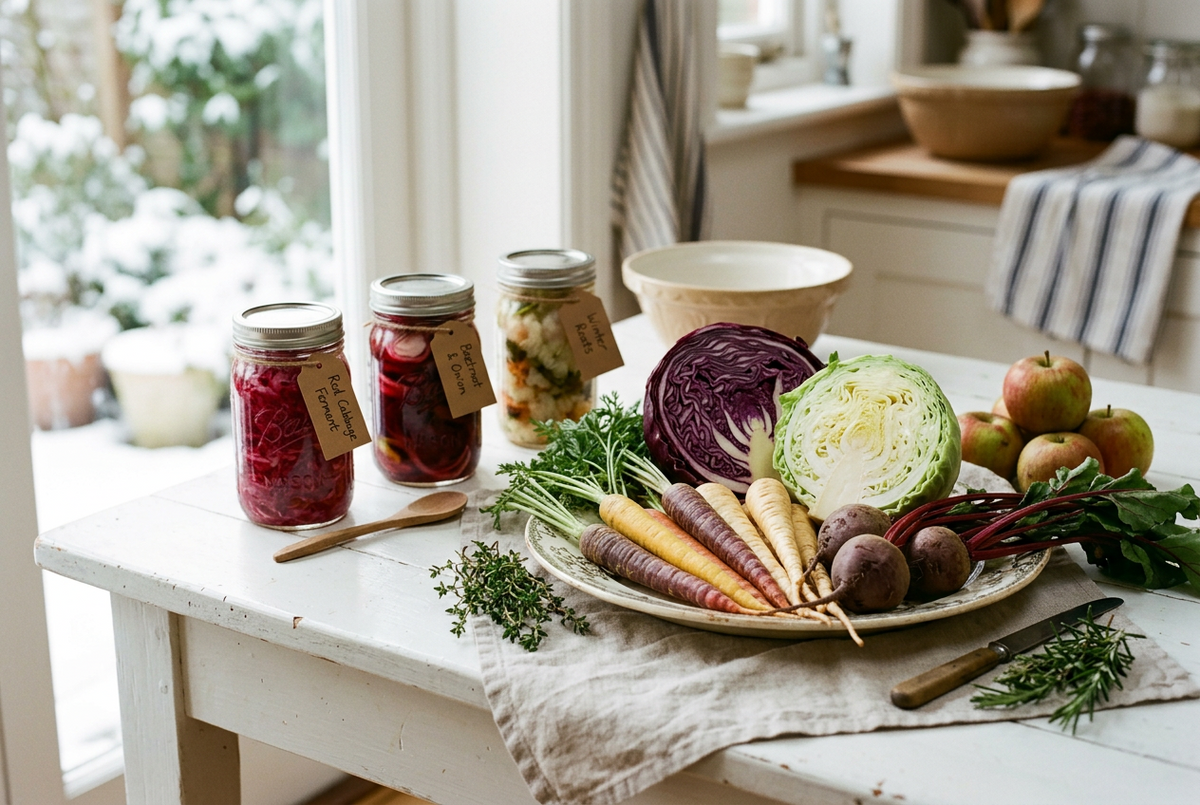
Wenn es draußen kälter wird, verändert sich auch die Auswahl an frischen Zutaten in der Küche. Statt sommerlicher Tomaten und Zucchini stehen jetzt Kohl, Karotten, Rote Bete und Wurzelgemüse im Mittelpunkt. Viele dieser Zutaten lassen sich wunderbar fermentieren und bringen...

Read moreabout Fermentierte Lebensmittel im Winter: Welche Zutaten haben Saison?

Warum enthält Kombucha Zucker, obwohl er fermentiert wird?

Why does kombucha contain sugar even though it is fermented?

You may have already wondered: Why does kombucha contain sugar even though it is fermented? After all, some of the sugar is converted by yeasts and bacteria during fermentation. But it doesn't have to disappear completely. In this article, you...

Read moreabout Why does kombucha contain sugar even though it is fermented?

Kombucha Ginger im Porträt: Wie schmeckt Ingwer-Kombucha?

Kombucha Ginger in Focus: What Does Ginger Kombucha Taste Like?

You like ginger and are wondering what it tastes like in kombucha? Then you will discover an exciting combination here: ginger kombucha combines the characteristic taste of fermented tea with the spicy note of ginger. The result is a drink...

Read moreabout Kombucha Ginger in Focus: What Does Ginger Kombucha Taste Like?

Was ist Raw Kombucha? Der Unterschied zu pasteurisiertem Kombucha

What is raw kombucha? The difference compared to pasteurized kombucha

You've heard of raw kombucha before, but you're not sure what it is? Then you've come to the right place! There is an important difference when it comes to kombucha: some varieties are pasteurized after fermentation, while others remain raw....

Read moreabout What is raw kombucha? The difference compared to pasteurized kombucha

Herbstliche Kombucha-Rezepte: 5 Ideen mit Apfel, Birne und Gewürzen

Autumn Kombucha Recipes: 5 Ideas with Apple, Pear, and Spices

When the days get shorter, the air outside smells of autumn, and we make ourselves cozy at home, a little autumn can also move into the glass. 🍂 How about fruity apple, juicy pear, a pinch of cinnamon, and a...

Read moreabout Autumn Kombucha Recipes: 5 Ideas with Apple, Pear, and Spices

Mate Tee Trinkhalm Mateteegefaess

Mate Kombucha: What you should know about mate tea, caffeine, and yerba mate

Mate tea meets kombucha Mate and kombucha can be combined for an exciting flavor profile: the characteristically bitter, slightly smoky taste of mate meets the typical sweet-tart note of fermented kombucha. Mate tea has a long tradition, especially in South...

Read moreabout Mate Kombucha: What you should know about mate tea, caffeine, and yerba mate

Schwangere Frau im Anschnitt grosser Bauch Wiese Abendsonne

Is kombucha suitable for pregnant women and children? All about the alcohol content

Who should drink kombucha? Kombucha is a fermented tea drink. Fermentation can produce small amounts of alcohol. Depending on the tea used, kombucha may also contain caffeine. But how is alcohol actually produced in kombucha? How high can the alcohol...

Read moreabout Is kombucha suitable for pregnant women and children? All about the alcohol content

Warum kann Kombucha Alkohol enthalten? Alle Fragen zum Alkoholgehalt im Überblick

Why Can Kombucha Contain Alcohol? All Your Questions About Alcohol Content Answered

How is alcohol formed in kombucha? Is there kombucha without alcohol? Can pregnant women drink kombucha? Can I make alcohol-free kombucha? All your questions about kombucha and alcohol answered here!

Read moreabout Why Can Kombucha Contain Alcohol? All Your Questions About Alcohol Content Answered

10 Fakten zu Kombucha kaufen oder selber brauen Inhaltsstoffe

Fermented Tea Drink – 10 Interesting Kombucha Facts

What You Should Also Know About Kombucha 1. Kombucha Shelf Life How long kombucha lasts depends on how it is made, bottled, and stored. Because of this, it is not possible to give a general shelf life of several months...

Read moreabout Fermented Tea Drink – 10 Interesting Kombucha Facts

¹at the time of bottling
²Vitamin C contributes to the normal function of the immune system, normal energy-yielding metabolism, and the protection of cells from oxidative stress.
  • Vitamin C contributes to the normal function of the immune system.
  • Vitamin C contributes to normal psychological function.
  • Vitamin C contributes to normal energy-yielding metabolism.
  • Vitamin C contributes to the reduction of tiredness and fatigue.
  • Vitamin C contributes to the normal functioning of the nervous system.
  • Vitamin C contributes to the protection of cells from oxidative stress.
  • Vitamin C contributes to the regeneration of the reduced form of vitamin E.
  • Vitamin C contributes to normal collagen formation for the normal function of the skin.
  • Vitamin C contributes to normal collagen formation for the normal function of blood vessels.
  • Vitamin C contributes to normal collagen formation for the normal function of bones, cartilage, teeth and gums.
  • Vitamin C increases iron absorption.